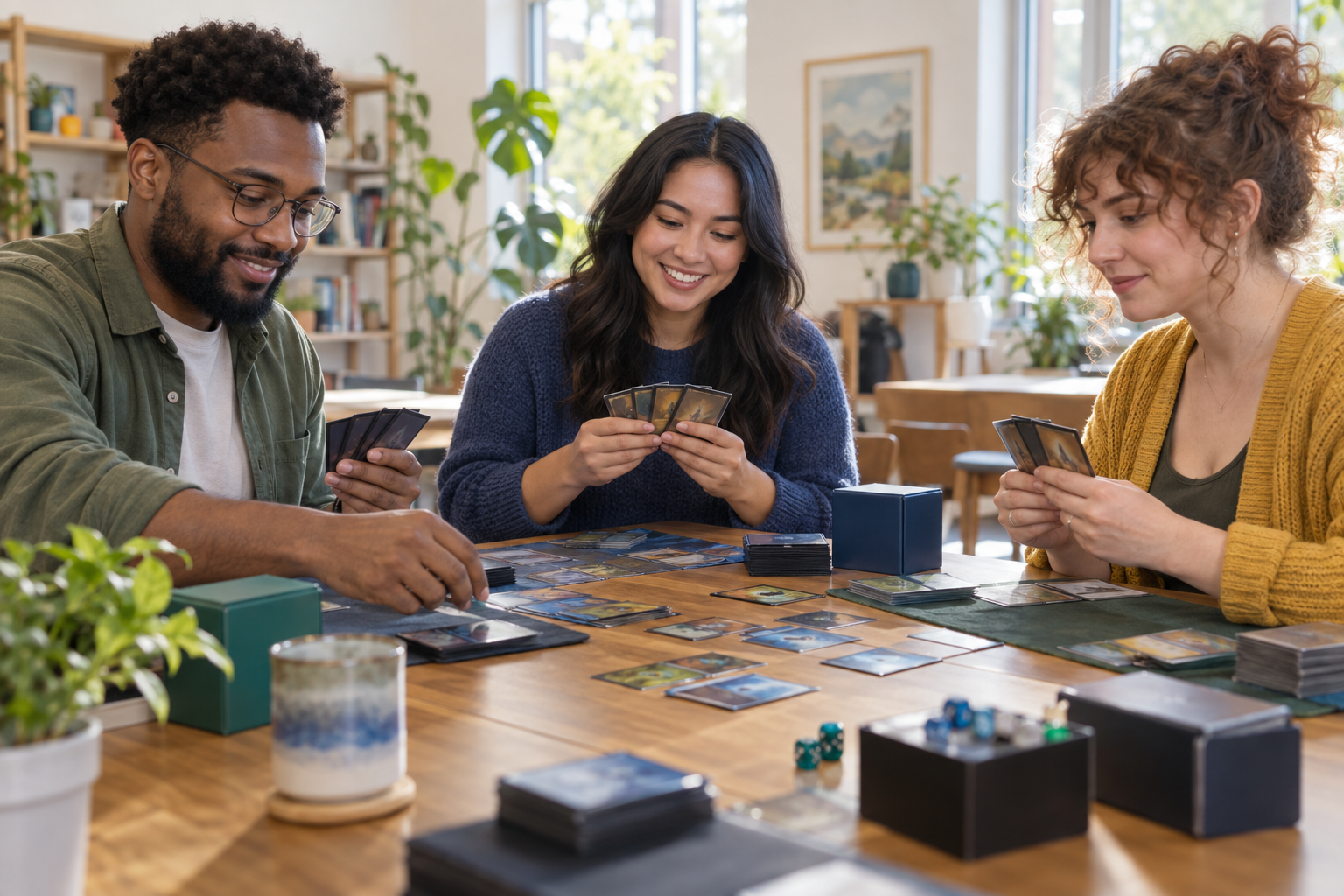
As more people look for simple ways to unwind without spending additional time online, traditional tabletop activities are gaining renewed attention. Playing with Pokemon cards can provide a structured mental break that shifts attention away from work, study and digital notifications while encouraging concentration, planning and face-to-face interaction.
Community sessions can add an important social element to the activity, particularly when a hobby shop offers welcoming spaces for beginners, families and experienced players. Regular participation may help people build connections around a shared interest, although gaming should remain part of a balanced lifestyle rather than being treated as a substitute for professional mental health support.
Focused Play May Support Relaxation
Relaxation does not always require complete inactivity. Some people unwind more effectively through an absorbing task that directs their attention towards a clear set of rules and manageable decisions.
A card match creates a temporary focus on turns, available options and an opponent’s strategy. This can provide distance from everyday pressures by replacing open-ended worries with a defined activity. The game has a beginning, a sequence of actions and a clear conclusion, which may make it easier to remain present.
The effect depends on how the activity is approached. Friendly play may feel calming, while highly competitive matches can create tension. Choosing suitable opponents, accepting losses and setting reasonable session lengths can help protect the recreational value of the game.
Strategic Decisions Keep the Mind Engaged
Trading card games require players to interpret information, plan ahead and adjust when circumstances change. Each turn involves deciding which resources to use, which cards to hold and how to respond to another player.
The Pokémon tcg combines turn-taking, probability and tactical decision-making within a consistent rules system. Learning these mechanics can provide mental stimulation by encouraging attention, memory and flexible thinking.
These features may make the activity an engaging form of recreation, but they should not be promoted as a medical treatment or a guaranteed way to improve cognitive health. Brain wellbeing depends on many factors, including sleep, physical activity, nutrition, social participation and appropriate healthcare.
Face-to-Face Gaming Encourages Connection
Social connection is an important part of general wellbeing. Card games create a reason for people to meet, communicate and take part in a shared activity without requiring constant conversation.
For some participants, having a game on the table can reduce the pressure of an unstructured social setting. Conversation may develop naturally through deck choices, trading and discussion of recent matches.
Community events can also bring together people of different ages and experience levels. Beginners may learn from established players, while families can participate in an activity that is not centred on television or mobile devices.
Positive outcomes depend on the environment. Organisers should establish clear expectations for respectful behaviour, fair trading and age-appropriate supervision. A welcoming session should allow participants to enjoy competition without intimidation or aggressive conduct.
Collecting Provides a Manageable Project
Collecting can offer a sense of structure and progress when it is approached within clear limits. Sorting items by set, type or rarity gives participants a practical task that requires attention to detail.
Digital catalogues can make this process easier. A collector may use a Pokemon tag to group related products, record owned items or identify gaps without repeatedly sorting through an entire physical collection.
Protective folders, sleeves and labelled storage boxes can also encourage organisation. Maintaining a tidy collection may provide satisfaction while reducing the likelihood of cards being damaged, misplaced or purchased twice.
However, collecting can become stressful if the goal is to own every release. Choosing a specific set, character or artwork style can keep the project realistic and reduce pressure to make frequent purchases.
Spending Boundaries Support Wellbeing
Randomised packs can create excitement because the contents are unknown before opening. That uncertainty can also encourage repeated purchases when someone is searching for a particular item.
A defined budget helps keep participation enjoyable. Adults can decide on a weekly or monthly limit, while parents can establish clear spending rules for younger players. These boundaries are especially important when products are promoted through limited releases or online scarcity.
Buying a specific card may be more economical than opening multiple packs in the hope of finding it. Consumers should compare prices, review condition information and avoid treating collectible items as guaranteed financial investments.
The activity should not interfere with essential expenses or lead to secrecy about spending. If purchasing begins to create distress, conflict or financial pressure, taking a break and seeking support may be appropriate.
Physical Balance Still Matters
Card gaming is largely sedentary, so regular movement remains important. Healthdirect advises that physical activity can support mental health, concentration and social interaction.
Players can build healthier habits around longer sessions by standing between games, stretching, drinking water and taking short movement breaks. Adequate lighting, supportive seating and reasonable session lengths can also improve comfort.
Late-night play should not routinely replace sleep, while events should allow time for regular meals and other responsibilities. A leisure activity is most beneficial when it complements daily life rather than displacing important health habits.
Healthy Gaming Depends on Balance
Tabletop play can provide relaxation, mental engagement and social contact when expectations remain realistic. Social connection is associated with health and wellbeing across the lifespan, making inclusive community activities potentially valuable.
The strongest benefit comes from balance. Enjoyable matches, sensible spending, respectful social interaction and regular physical activity can allow card gaming to sit comfortably within a healthy routine.